

Kauri Copal-Borneo Kauri
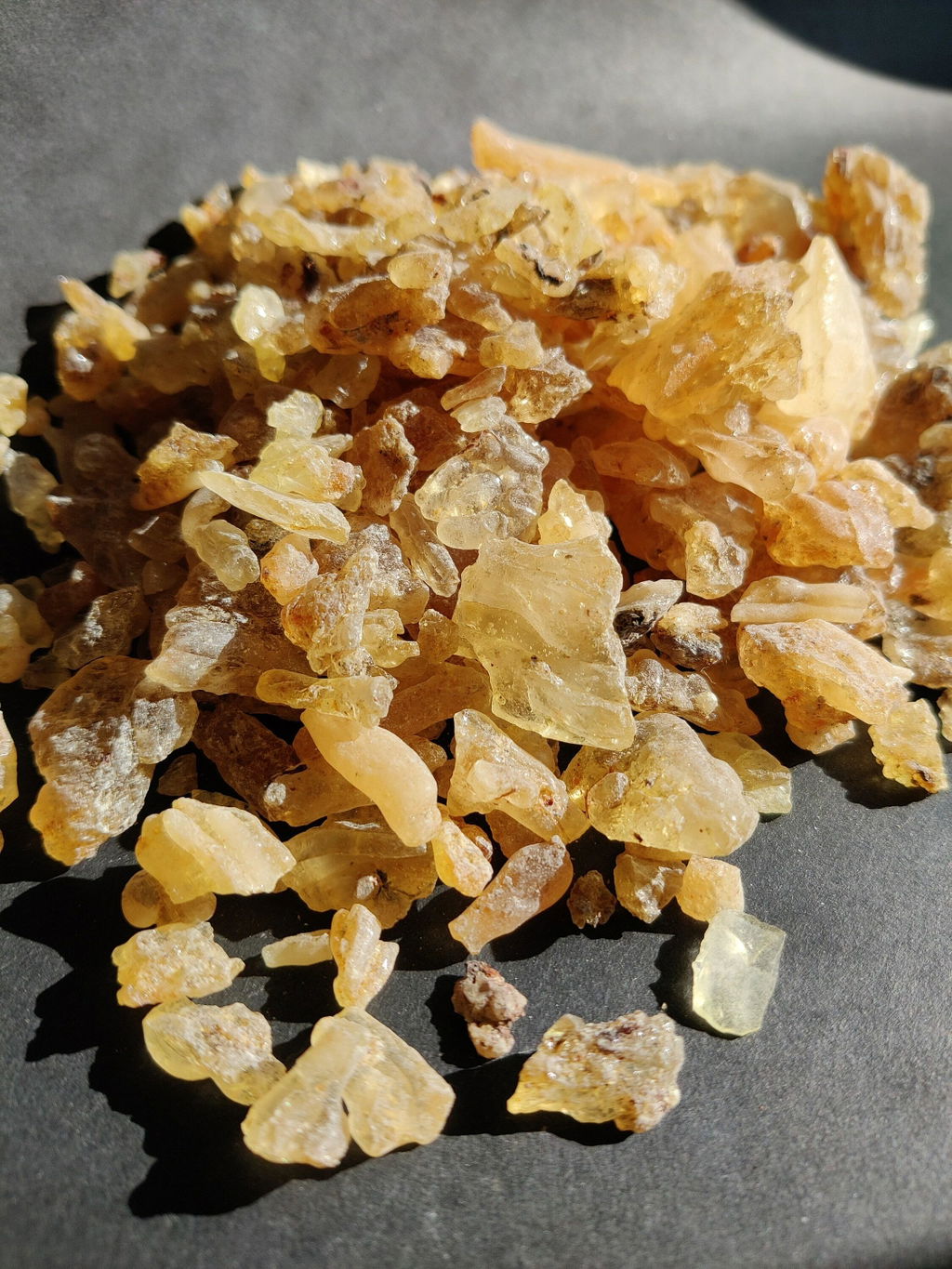
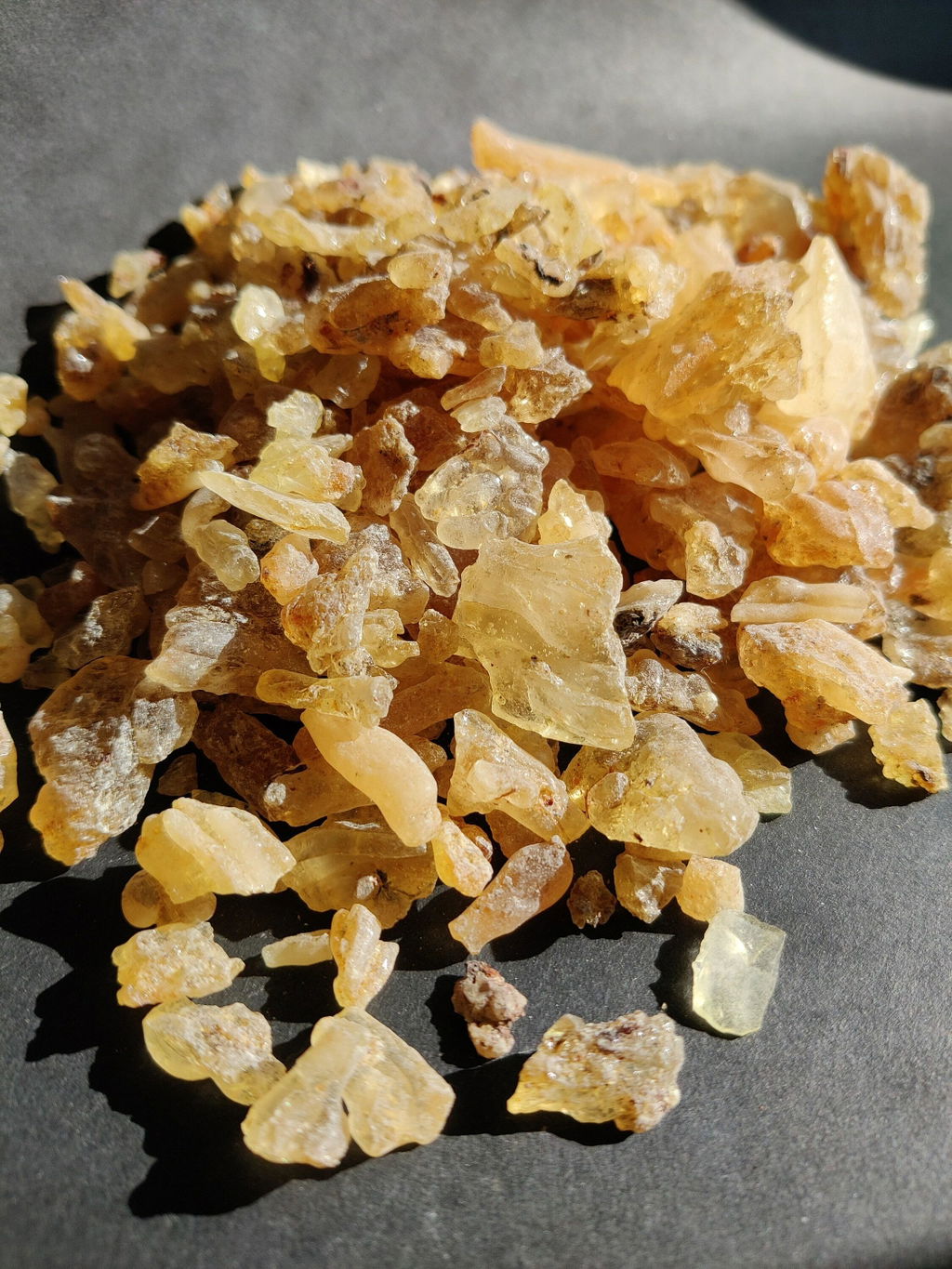
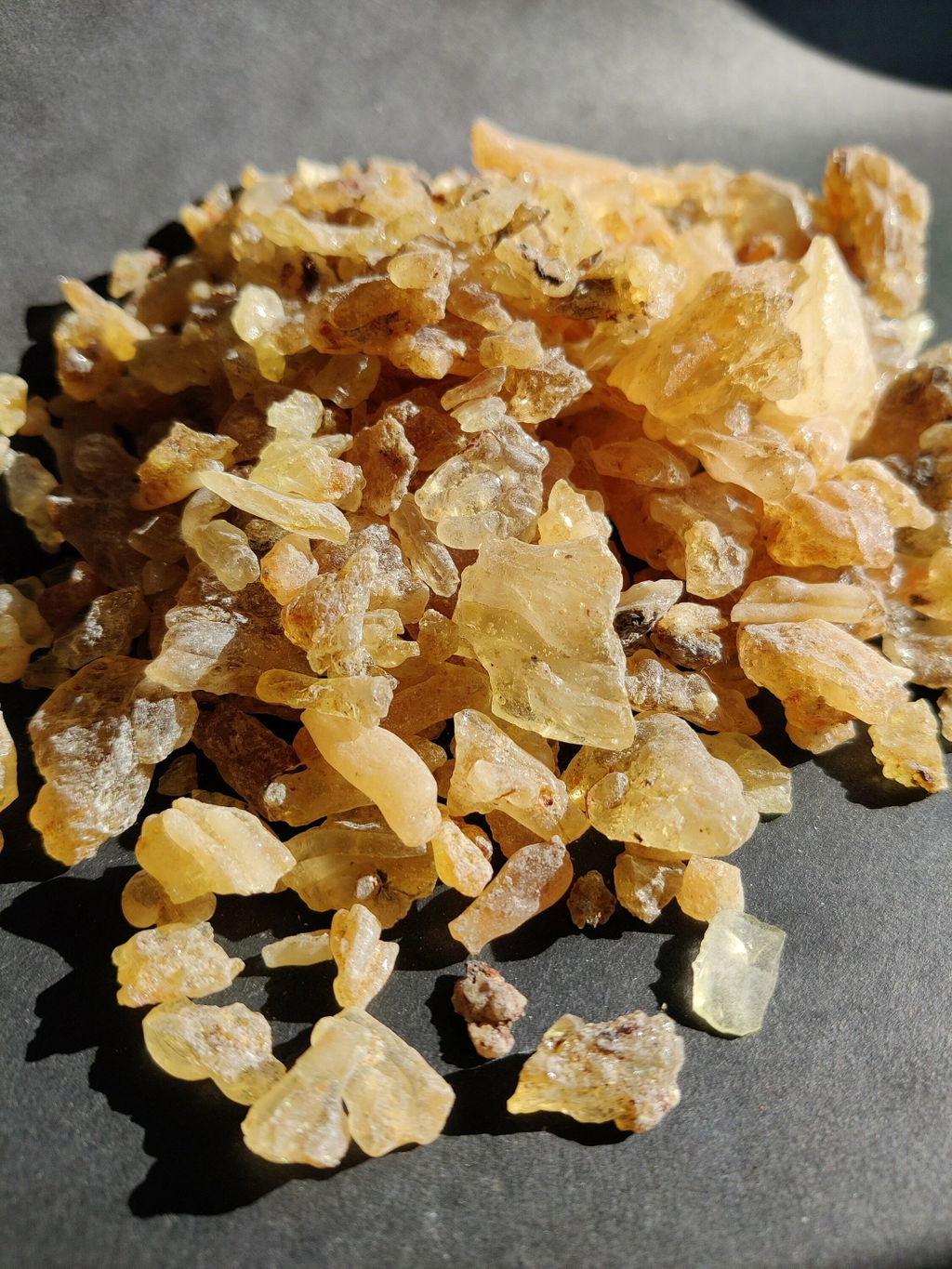
Kauri Copal-Borneo Kauri Resin-For Incense-Craft-Woodworking. Agathis borneensis-Borneo, has a sweet, softly spicy aroma with hints of citrus peel when burned.
$8.00 - $178.00
The Agathis family of trees are tall evergreens with cones similar to Pine, Spruce and Cedar trees.
The name Agathis comes from the Greek language and means a ball of string, alluding to the spherical shape of the female cones.
The name Agathis comes from the Greek language and means a ball of string, alluding to the spherical shape of the female cones.
Borneo Copal is from the same tree family that provides New Zealand fossilized Kauri Copal. However, Borneo Kauri Copal is a young Copal and not fossilized.
Collected from the ground, Borneo Copal resin is traditionally used as fuel for campfires, waterproofing boats, and medicine. The soot from the burning resin is used as a dye and for traditional tattooing. The resin is used commercially in making high-quality, durable varnishes and lacquers.
This is another resin that does not have a lot of fragrance till it is burned. Once on the coal, it opens with a sweet spice note emits a sweet, soft and enchanting smoke.
The trees from the Agathis family grow to a massive size and provide excellent wood for furniture, cabinetry, crafts and export. The wood is straight-grained, even in colour and easy to work. These valuable traits do not work in its favour since many of the old forest stands have been cut down, adding some Agathis family species to the endangered list. There are many plantations of Agathis trees in the region, but as of yet, not enough to keep the old-growth forests from dwindling.
Similar to Zanzibar Copal, Kauri Copal is a very pretty, semi-translucent, hard and brittle exudate.
Since this material is quite hard, one needs to break it into smaller pieces before placing on the coal or powdering it for processing. This is easily done by inserting the resin pieces in a closed ziplock bag and tapping them with a hammer. When they are down to about 1/4", they can easily be powdered in a mortar and pestle or an electric herb/coffee grinder.
Because of its hardness and clarity, Kauri Copal is an excellent material for making high-grade, durable lacquers and varnishes. It dissolves in pure alcohol and Turpentine. Linoleum is produced with copal and linseed oil. Hence the name Lin-oleum linseed and oil.
The word Copal truly is generic. It is used in Central and South America to describe incense. Thus we will find resins from very different species with very different physical and aromatic traits, all referred to locally as Copal.
In the West, the word Copal refers to any hard, pure resin devoid of gum and essential oil that can be dissolved in a solvent such as alcohol, hot vegetable oils or turpentine to produce hard varnishes, lacquers and other industrial finishes.
For an in-depth look at some of the different Copals, please see my blog post here-https://apothecarysgarden.com/2022/05/02/buying-copal-resin-read-this-first/
Kauri Copal can be burned or compounded with other aromatic materials in sticks, cones, pastilles or loose incense.
Dan
Materials: Copal, Kauri Copal, Agathis Borneensis.
M
Lovely Agathis resins from a species rarely seen. Great addition to the collection! Thanks Dan!
E
Lovely Agathis resins from a species rarely seen. Great addition to the collection! Thanks Dan!
N
As GREAT as always - rare and treasured, best quality and one of the most friendly sellers I ever met. THANK YOU!
M
Wonderful product and very prompt shipping. Thanks!
E
Wonderful product and very prompt shipping. Thanks!
K
Everything is just perfect :)
E
Everything is just perfect :)
D
Another of my favorites … crisp and clean … feels Pacific
E
Another of my favorites … crisp and clean … feels Pacific
S
Wonderful, like Dan's treasured resins always are! Even after many years of contact and purchases, there is always something new to find and the quality, knowledge and love behind his work is always present.