


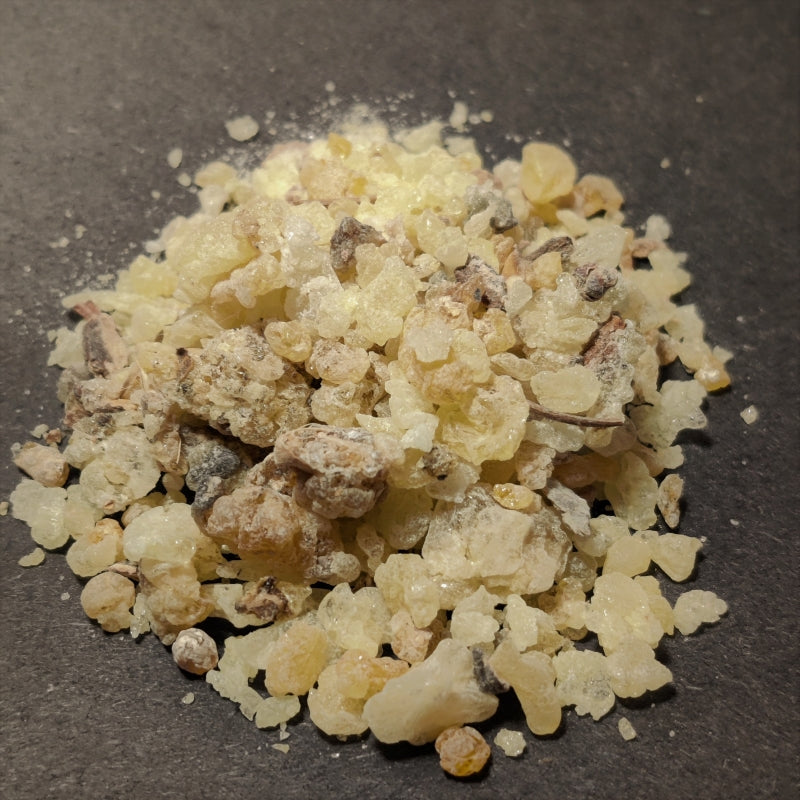


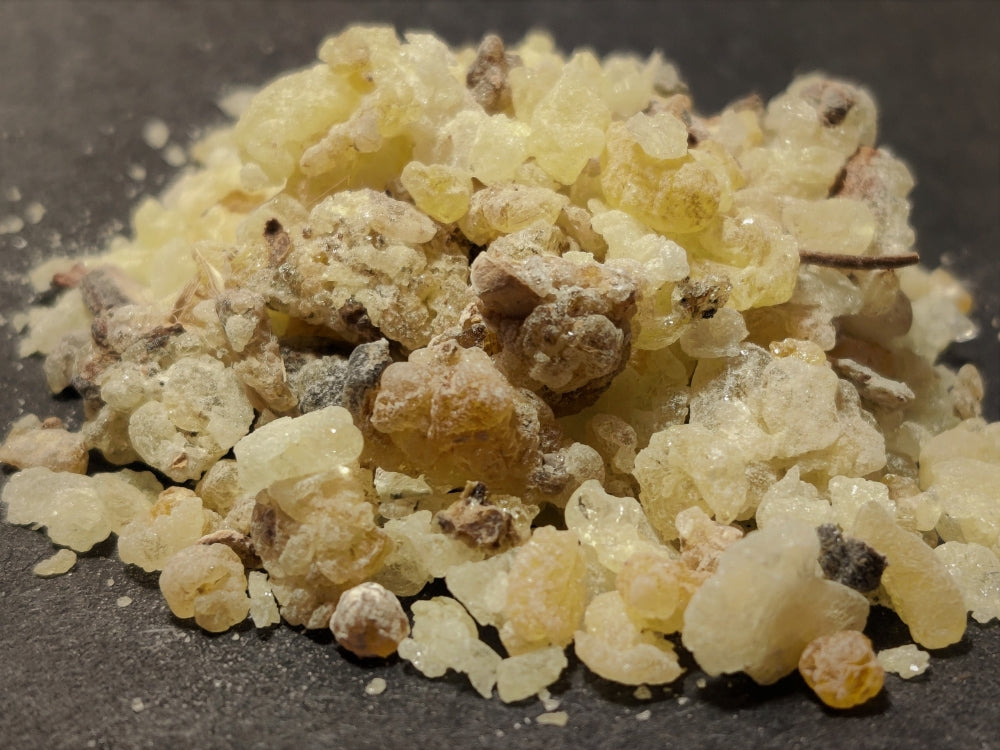

Terebinth resin tears-Shirazi Mastic
Terebinth resin-Pistacia terebinthus-Afghanistan-Elah- incense, medicine, perfume, chewing gum.
Terebinth tears are used as a natural chewing gum, much like the Chios Mastic in the shop.
Their flavour is less pungent than the Chios mastic and slightly more bitter than the Chios Mastic tears.
The Terebinth tree was held in great esteem in ancient times and is mentioned 16 times in the Old Testament.
$9.00 - $175.00
Terebinth trees can live up to a thousand years and many are used as landmarks and considered sacred trees often marking ancient burial sites.
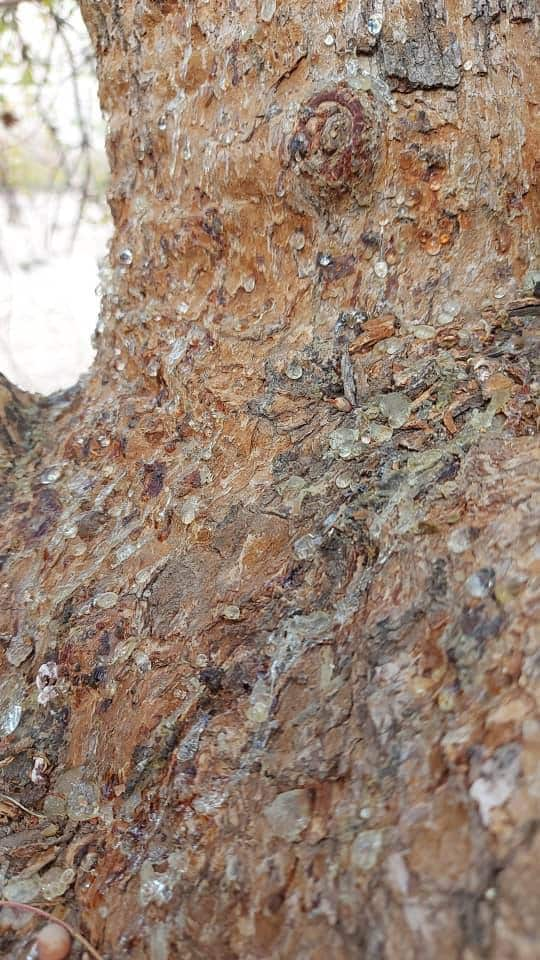
The "Mastic" tears, ie; the resin is a natural exudate and does not require tapping the tree which puts this product high on my sustainable harvest list.
Growing from Palestine to Iran, this tree was once classified as Pistacia Palestina but has recently been deemed synonymous with P. Terebinthus.
The Terebinth tree is believed by many to be the great "Elah" tree mentioned often in the Old Testament and was sacred to the Canaanites.
The name given in the Bible to this tree is Elah, which is the feminine form of the word "El" one of the names of the Jewish God. Thus name Elah is believed by many to hark back to the days of Goddess worship in the Holy land and was sacred to the Goddess.
David fought Goliath in the Elah Valley.
Terebinth resin is used traditionally as a natural chewing gum contributing to oral and gastrointestinal care much in the same ways as its cousin Chios Mastic. Indeed these trees are closely related and both members of the Pistacia family which also gives us our pistachio nuts, (Pistacia vera).
The resin, seeds and leaves of the Terebinth tree have been used as medicine for thousands of years.
Some parts of this shipment are lighter in colour and some a bit darker. Some parts are very fresh and you may find sticky clumps in the bag. This is natural and these clumps can be easily broken up prior to use.
Please note our ounces are 30 grams, not the 25 grams offered by many other sellers. To this generous ounce, we ALWAYS add a bit more and NEVER less to our packages. Something our customers have come to count on.
For recipes, instructions and more information about the different types of Frankincense, Myrrh and other oleoresins, please visit my blog at http://apothecarysgarden.com.
Dan