




Copal Resin Sampler Sets - Standard and Exotic
Copal Sampler Sets — Standard & Exotic
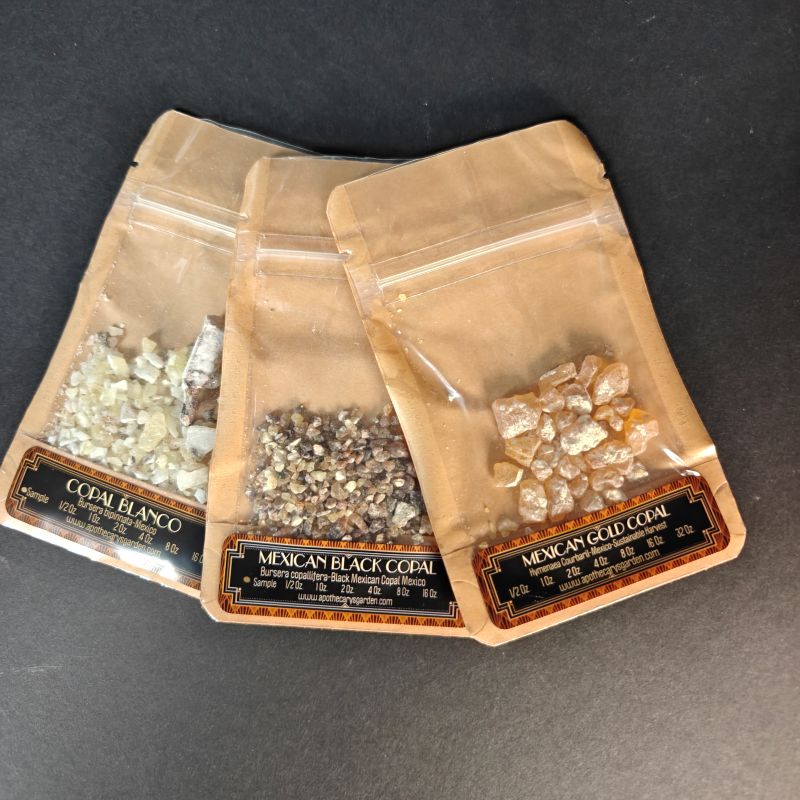
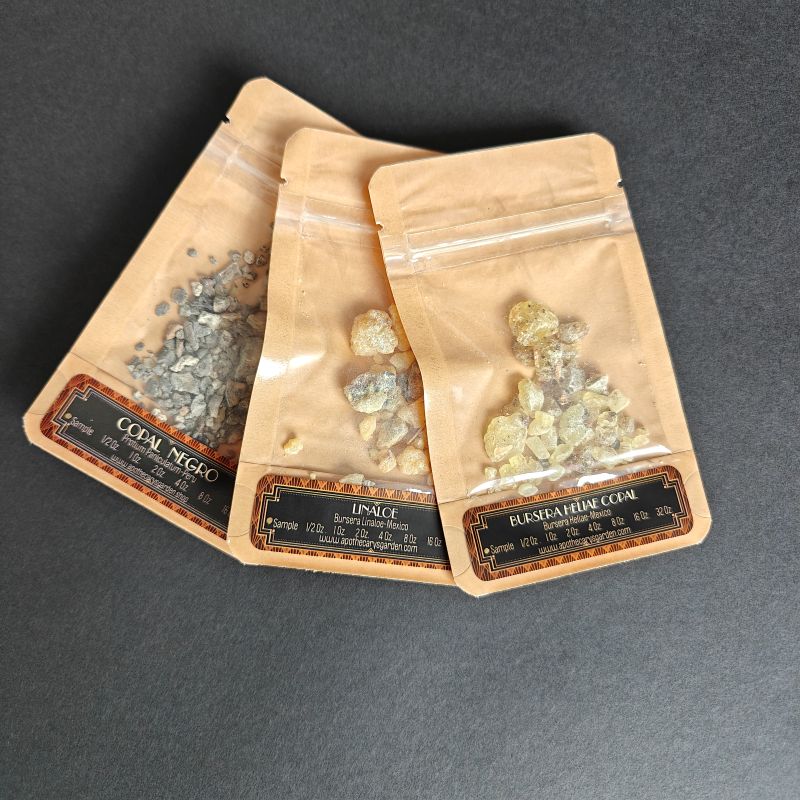
Get acquainted with the fragrant world of Copal through two sampler sets, each featuring three distinct resins. Choose the Standard Set to explore Copal Blanco (Bursera bipinnata), Mexican Black Copal (Bursera copallifera) and Mexican Gold Copal (Hymenaea courbaril), or the Exotic Set for Bursera Heliae Copal (Bursera heliae), Bursera Linaloe Copal (Bursera linaloe) and Peruvian Copal Negro (Protium paniculatum). Experience each resin’s individual character and let your nose introduce you to your favourites. Each set includes 5 g of each resin, for a total of 15 g.
$10.00 - $16.00
I have put together two sampler sets. If you are new to these aromatic resins, the Standard Set offers a lovely introduction. Exotic is a prized collection worth discovering. Both offer an opportunity to meet a new favourite along the way.
One thing is worth knowing before you begin, because the word Copal covers two very different materials.
In Central America, Copal simply means incense, and the name is applied to all aromatic tree resins used for ceremony and ritual. These are the soft Copals: oleoresins containing varying proportions of essential oils, which lend them their fragrance and soften the resin. Soft Copals have a long tradition of use as incense and in traditional medicine, and most are soluble in warm oils and have an affinity with the skin, which makes them useful from a medicinal and cosmetic perspective.
Western language borrowed the word and uses it to mean something else: hard, clear resins that lend themselves to the preparation of durable finishes. Hard Copals are odourless, brittle, translucent or clear, and most break with a glass-like fracture. Many are semi-fossilized, buried in the ground for hundreds or thousands of years. Before petroleum-based resins were available, they were used for varnishes, lacquers, adhesives, furniture, musical instruments and decorative coatings, and the Flemish masters developed methods of incorporating Copal in their paints that gave them an enamel-like finish.
Aroma or durability? Ceremony or craft? Both are called Copal, and knowing which one is in front of you is half the pleasure.
Explore three different Copal types side by side and discover which ones appeal to you. Choose Standard or Exotic from the Sampler Set menu.
STANDARD: Copal Blanco, Mexican Black Copal & Mexican Gold Copal
— Where Appreciation Begins
Three distinctive Copals:
• Copal Blanco — White Copal, also called Sacred Copal, from Bursera bipinnata in Mexico. Sweet and lemony, it burns to a thick column of gentle smoke with hints of burnt caramel and soft ethereal florals. Best known for its use in Mexican Day of the Dead ceremonies, where the pillar of smoke is seen as an offering that raises one's prayers to the Divine, and as a beacon leading the ancestral spirits home.
• Mexican Black Copal — Called Copal Santo locally, from Bursera copallifera in Southern Mexico. Sweet, fruity and vibrant with a unique caramel undertone, it has been burned in Mexican rites and homes for hundreds of years.
• Mexican Gold Copal — The exception to the rule: a hard Copal, from Hymenaea courbaril, burned as incense in Mesoamerica. Scentless until burned, it gives dry wood wrapped in a sweet, light vanilla amber glow.
EXOTIC: Bursera Heliae Copal, Linaloe Copal & Peruvian Copal Negro
— A Prized Collection Worth Discovering
-
Bursera Heliae Copal — From Bursera heliae in Mexico. Bright and lively, with notes of citrus peel, green wood and dry balsam. On the coal, it opens into a fresh, lemony, woody fragrance with a gentle sweetness. A lovely introduction to one of the lesser-known members of the Bursera family. Use it on the coal or an electric heater, where it lifts an incense blend with a bright resinous top note and sits beautifully beside Frankincense, Palo Santo and Sandalwood.
-
Linaloe Copal — From Bursera linaloe in Southern Mexico. Soft, sweet and woody, with a fresh floral quality. The resin of this fragrant tree is a less familiar find than its aromatic wood and berries, which are used to produce Linaloe essential oil. Its resin has a history of use in Mesoamerican rites and for cleansing sacred spaces. Use it as incense, or dissolve it in warm oil for salves, serums and medicated oils for tired muscles and dry skin.
-
Peruvian Copal Negro — Black Copal from Protium paniculatum in Peru. Sweet, fruity and green when warmed, with caramel and light floral notes. This is a different resin from the Mexican Black Copal in the Standard Set—a lovely example of how the same name can lead your nose somewhere entirely new
Every region has its Copal Negro and its Copal Blanco, harvested from its local trees, and the main tree families that provide us with soft Copals in the Americas include Bursera, Protium and Pinus. That is why one word covers resins with very different sources, histories, physical traits and applications, and why it pays to know the species behind the name.
Copal has been burned as an offering in Mesoamerica for thousands of years, and it remains a resin of ceremony, of the home and of the ancestors.
For more information about Copal, including how to tell a soft Copal from a hard one and what you are actually buying, please visit my blog at http://apothecarysgarden.com.