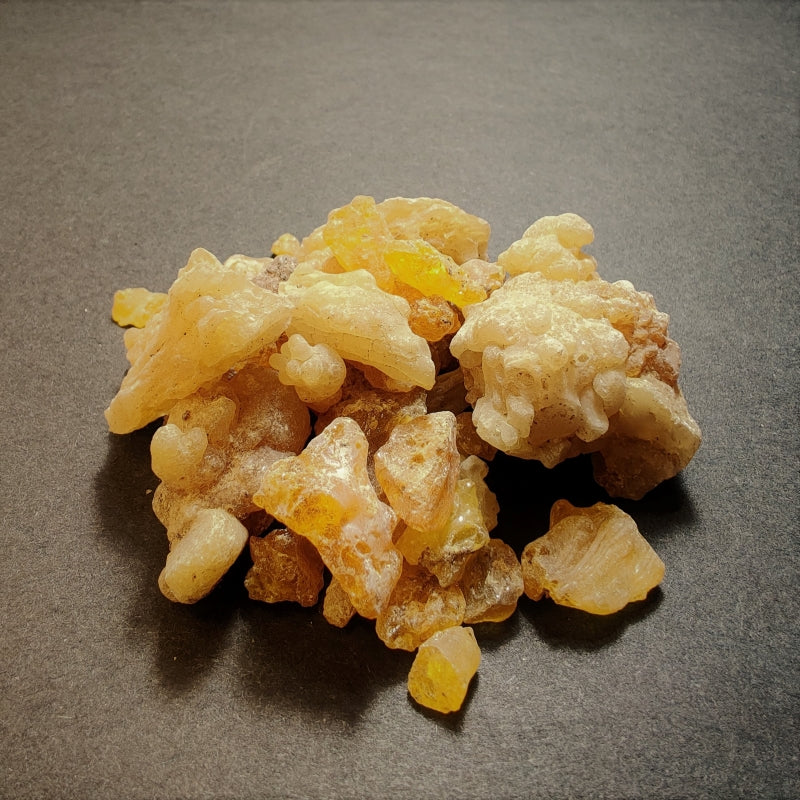
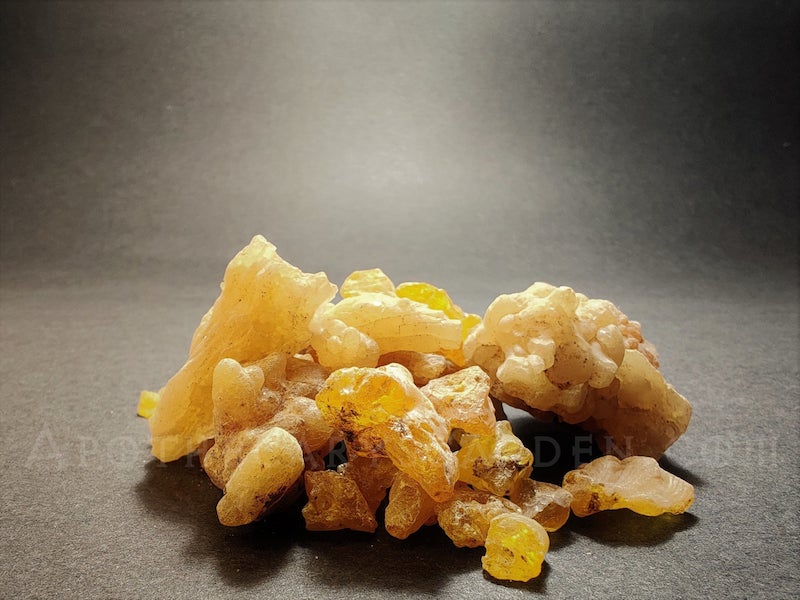
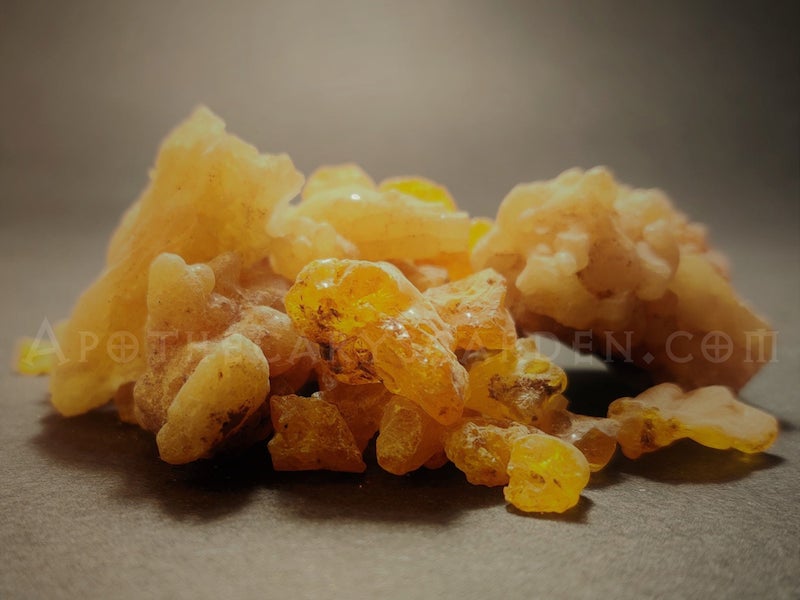
Peruvian Myrrh Resin

Peruvian Myrrh resin is not really a genuine Myrrh since there are no Myrrh or Commiphora trees of any kind in the Americas. However, the colloquial name of Peruvian Myrrh for Styrax weberbaueri resin has become accepted in the world of e-commerce.

Peruvian Myrrh is completely unrelated to Commiphora Myrrha. However one recognizes the similarity and motivation for naming this resin "Myrrh" when it is burned as incense.

Peruvian Myrrh opens with a bitterness reminiscent of true Myrrh, but the resemblance ends there.

I call this resin Ughohwowyah.

On the coal, it opens with an almost unpleasant bitter smell, makes me go UGH. Then, immediately after this unusual opening, something changes, and there is an involuntary "OH (As in "Oh, I didn't expect this"), which leads to an immediate WOW! Then, really, all one can say is YAH!
Hence the name Ughohwowyah.

The fragrance of Peruvian Myrrh resin on the coal is extremely complex! After the fleeting Myrrhish bitterness, the fragrance of this resin blossoms into the vanilla sweetness of Benzoin Siam, with a hint of the Styrax from liquidambar styractiflua. Along come cinnamon and Allspice with citrus, caramel and Amber and then, they are all wrapped up in an air of distant lands that reminds me of the fragrant markets of Madagascar.

This is a very complex and exotic smelling resin!! Very unusual!

Little is known about this tree and resin, its local medicinal and cultural uses, except that it is harvested sustainably in the Piura region of Peru. I will update this listing with information as I learn more.

In the meantime, let us welcome Ughohwowyah and appreciate the wonderful aromatic qualities it has to share with us.

Dan

Materials: Styrax Weberbaueri, Peruvian Myrrh.

Frequently asked questions

Some questions and answers are automatically generated.

What scent notes does this resin have?
Customers describe a complex, evolving scent journey. It opens with a bitter, myrrh-like note, then develops into sweetness with vanilla and benzoin undertones, followed by warming spices like cinnamon and allspice, along with hints of caramel, citrus, and amber. Some reviewers note umami or savory opening notes, honey, and toasted or charred caramel as it progresses.
How does it perform on hot coals?
One detailed reviewer warns against burning it directly on coals, noting it can smell like burnt caramel on smoldering leaves. The resin is mentioned to barely melt, so grinding it finely or mixing it with something that melts better is recommended for easier use.
Does the scent change as it burns?
Yes, significantly. Reviewers consistently describe a dramatic unfolding of notes—starting with an initial bitter or umami phase, warming into spiced and sweet notes mid-burn, and finishing with smoky, caramel, and honey-like scents. One reviewer notes the charred note appears at the beginning rather than the end, which they found surprising.
Is this good for blending with other resins?
Several customers mention using it as a base for blends or exploring how it works in mixes, suggesting it is versatile. One reviewer noted they spent more time with it as a base for other resin combinations.
How long does the fragrance last?
One reviewer specifically noted it offers a long-lasting fragrance, indicating this resin provides extended scent output compared to some alternatives.
How does this compare to East Asian styrax resins?
A reviewer who is familiar with East Asian styrax resins noted that Peruvian Myrrh is much different in character, though it does share some vanilla notes. It is described as a distinct product in the styrax family.
What is the material composition?
The product description states this is Styrax weberbaueri resin from Peru. Despite being called Peruvian Myrrh colloquially, it is not related to true Myrrh (Commiphora species), which do not grow in the Americas.