






African Elemi Resin
African Elemi, also known as Camonya and Canarium schweinfurthii, is a rarely available and wonderfully fragrant natural oleoresin for perfume, incense, aromatic/medicated salves, oils and cremes.
Traditionally and sustainably harvested in the wild tropical jungles of West/Central Africa and Congo, eastwards to Uganda, the fruit of the tree is edible, and the seeds are high in fatty acids. The resin of Canarium schweinfurthii is used as incense for ceremonial and domestic purposes. Internally, the fragrant resin is anti-parasitic and, when blended with fats and oils acts as an emollient (Soothes, softens and moisturizes the skin), and is used to treat skin infections such as eczema, prickly heat and skin rashes. All the resins of the Elemi family are considered skin-nourishing and rejuvenating.
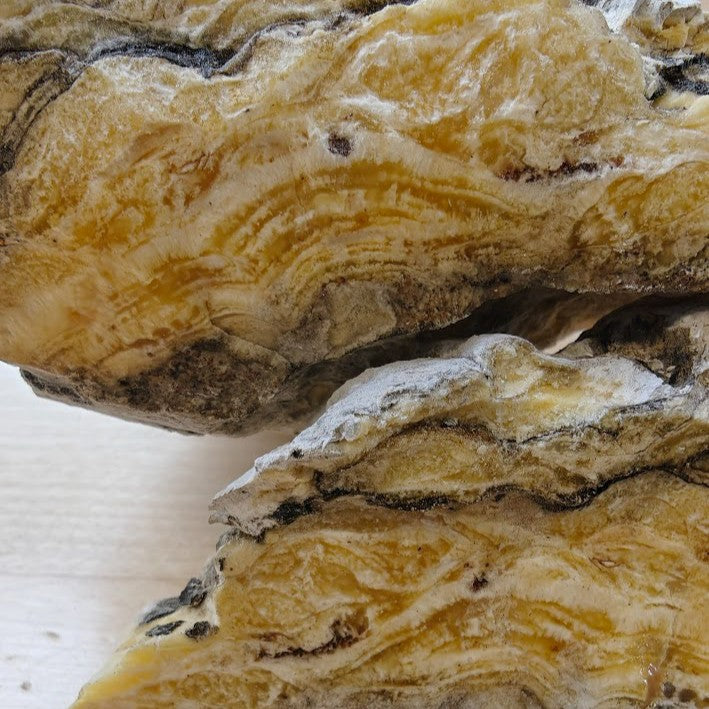
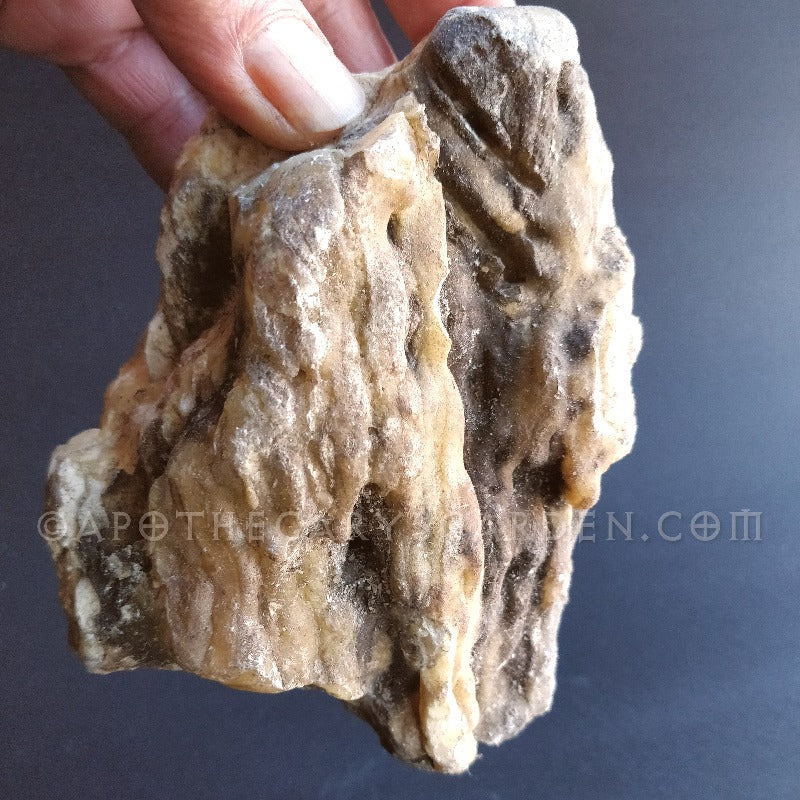
The demand for this resin on the international market is very low. For this reason, the trees are not cut or tapped. The resin accumulates over years on the tree forming beautiful layers akin to an Agate.See the photo above for reference.
Camonya presents an aromatic profile that is similar in character to Manilla Elemi and Madagascar Elemi but with more depth, complexity and softness than its sisters. It strikes me as the mature one in the family.
As incense on the coal, African Elemi offers an intriguing bouquet that initially greets one's nose with honeyed Lemon and mint, then gives way to soft Ambers, tobacco, wet dirt and a muskiness reminiscent of warm animal fur. It makes a sweet and uplifting incense and when dissolved in warm oils creates a (distractingly), sensuous and skin-healing massage oil.
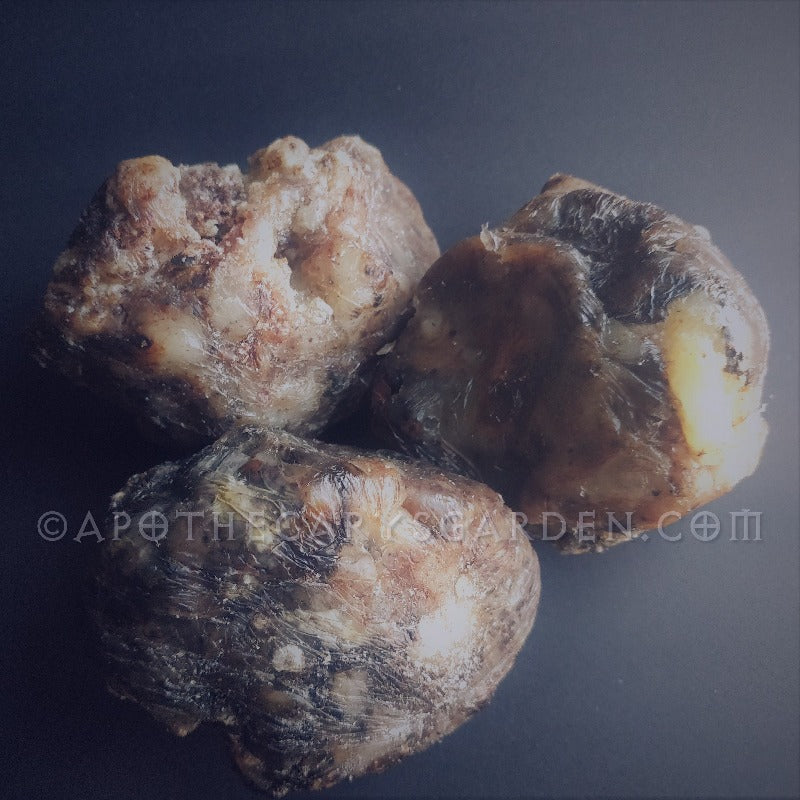
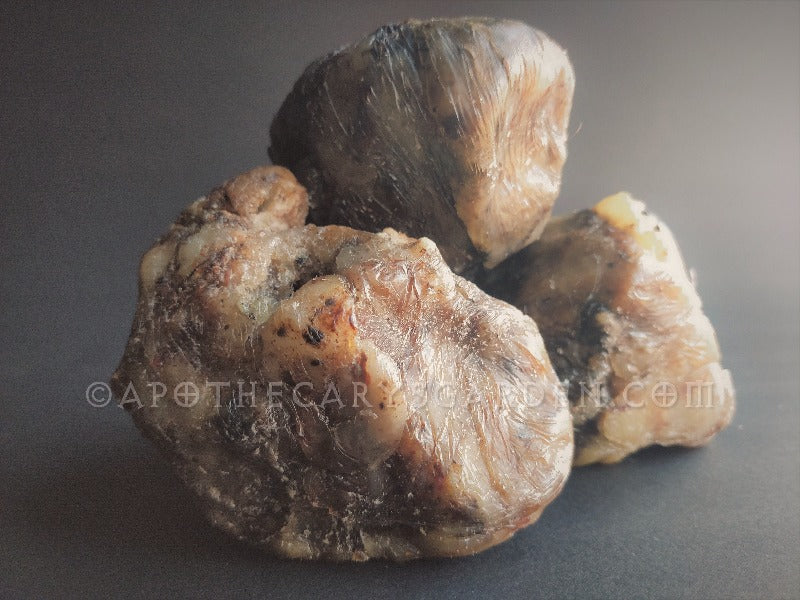
Due to the semi-liquid consistency of the fresh resin, it is traditionally rolled into balls and wrapped with the leaf of a tree until it can keep its shape on its own. For this reason, you will find the occasional leaf and stem fragment adhered to the resin pieces. These can be easily removed if desired and are truly a mark of authenticity.
African Elemi resin is a pure oleoresin, so it pools and burns clean on the charcoal. It will dissolve easily in warm oils, waxes and fats for producing candles, and medicinal and cosmetic products. You can find instructions for making an oil infusion/extract of Elemi here-https://apothecarysgarden.com/2014/07/30/how-to-make-a-whole-extract-of-frankincense-and-other-oleoresins/
The Elemi essential oil we are familiar with is that of Manila Elemi, Canarium Luzonicum and is considered to have anti-ageing and skin rejuvenating properties which are shared by all 3 species.
This is an exquisite find and I have only a limited quantity. Get it while it lasts.
Dan
Materials: Elemi resin, Canarium Schweinfurthii, African Elemi, Camonya.
$8.00 - $305.00